
What Are the Early Signs of Menopause in Your 40s? How to Manage Hot Flashes and Mood Swings Naturally
A patient sat in my clinic last week and said something I hear often: “Doctor, I don’t feel like myself anymore, and I don’t know if this is stress, my age, or something else.” More often than not, when a woman in her 40s describes this feeling, we’re looking at the early signs of menopause. I want to explain what this transition actually looks like, and how you can manage it without feeling like your body has become unpredictable overnight.
Perimenopause Usually Starts Before You Expect It
Many women assume menopause arrives suddenly in their early 50s, but the truth is that the transition called perimenopause often begins in your early to mid 40s and can last several years before your periods stop completely. This is your body gradually reducing oestrogen production, and it doesn’t happen in a straight line. Some months your hormones dip sharply; other months they rebound. That inconsistency is exactly why the symptoms can feel so confusing.
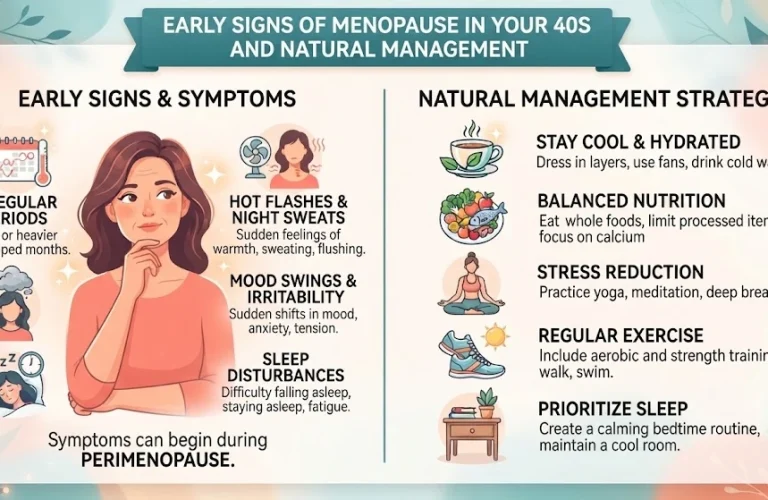
The Early Signs I Look Out For
When patients describe their symptoms to me, a few patterns come up again and again:
- Irregular periods: Cycles that become shorter, longer, heavier, or lighter than what’s normal for you. This is often the very first sign, and it’s one I take seriously, especially if bleeding becomes unusually heavy or frequent.
- Hot flashes and night sweats: A sudden wave of heat, often starting in the chest or face, sometimes followed by sweating or chills. These can happen a few times a week or several times a day.
- Mood swings and irritability: Fluctuating oestrogen affects the same brain chemistry involved in mood regulation, which is why many women notice anxiety, low mood, or irritability that feels out of character.
- Sleep disturbances: Difficulty falling asleep, or waking frequently, often linked to night sweats but sometimes occurring independently.
- Vaginal dryness and discomfort: A gradual change that can affect comfort during intercourse and everyday activity.
- Brain fog: Many women describe trouble concentrating or forgetfulness, which understandably worries them, but it’s a well-recognised and usually temporary part of this transition.
- Changes in libido: A dip in sexual desire that’s connected to hormonal shifts rather than anything else going on in your life.
Not every woman experiences all of these, and the intensity varies enormously. Some patients sail through with barely a symptom; others feel it affects nearly every part of daily life. Both experiences are completely normal.
Managing Hot Flashes and Mood Swings Naturally
I always start with natural, lifestyle-based strategies before considering anything else, and for many women, these changes alone make a meaningful difference.
For Hot Flashes
- Dress in layers so you can adjust quickly when a flash hits.
- Identify your personal triggers caffeine, alcohol, spicy food, and stress are common culprits I ask patients to track.
- Keep your bedroom cool and consider moisture-wicking sleepwear if night sweats are disrupting your sleep.
- Practice slow, deep breathing at the first sign of a flash; this can genuinely shorten how intense it feels.
- Stay physically active. Regular moderate exercise has consistently been shown to reduce the frequency of hot flashes over time.
For Mood Swings
- Prioritise consistent sleep, since poor sleep amplifies irritability and low mood far more than people realise.
- Build in regular movement even a daily walk noticeably improves mood stability for many of my patients.
- Reduce caffeine and alcohol, both of which can worsen anxiety and disrupt sleep quality.
- Try mindfulness or relaxation techniques, such as meditation or yoga, which have real evidence behind them for easing perimenopausal mood changes.
- Stay connected socially. Isolation tends to intensify low mood, while talking openly with other women going through the same transition often helps more than expected.
Nutrition Matters Too
I encourage patients to focus on calcium and vitamin D for bone health, phytoestrogen-rich foods like flaxseed and soy in moderation, and staying well hydrated. None of this replaces medical treatment when it’s needed, but it forms a solid foundation alongside anything else we might discuss.
When Natural Methods Aren't Enough
If your symptoms are significantly affecting your quality of life despite these changes, that’s when I talk to patients about additional options, including hormonal imbalance treatment or hormone therapy where appropriate. I also pay close attention to bleeding patterns during this transition. If periods become very heavy, prolonged, or occur after a gap of several months, I recommend getting that properly evaluated rather than assuming it’s “just perimenopause.” Sometimes what looks like a menopause symptom turns out to be something like fibroids or an ovarian cyst, so I never like to assume without checking.
Why I Recommend Getting Evaluated Rather Than Guessing
I understand the instinct to just push through this transition quietly — many women in Pakistan grow up believing this is something you simply endure. But you don’t have to manage this alone or in the dark. A short consultation can confirm whether what you’re experiencing is perimenopause, rule out other causes, and give you a personalised plan, whether that’s lifestyle changes, natural approaches, or medical support.
FAQs
At what age do early signs of menopause typically begin?
Most women start noticing perimenopausal changes in their early-to-mid 40s, though it can begin earlier or later depending on genetics and individual health factors.
How long does perimenopause usually last?
It varies widely, but this transitional phase commonly lasts anywhere from a few years up to seven or eight years before periods stop completely.
Is it normal to feel anxious or low during this stage?
Yes, hormonal fluctuations directly affect mood-regulating brain chemistry, so anxiety, irritability, and low mood are common and recognised symptoms of perimenopause.
Are irregular periods always a sign of menopause in your 40s?
Not always. While it’s a common early sign, irregular bleeding can also stem from other causes, which is why I recommend getting it properly checked rather than assuming.
When should I see a doctor about menopause symptoms?
If your symptoms are disrupting your daily life, if bleeding patterns change significantly, or if you simply want clarity on what’s happening in your body, it’s worth booking a consultation.
Let's Talk About What You're Experiencing
You don’t need to navigate this transition on guesswork or forums. If you’re noticing changes in your 40s and want a clear, personalised understanding of what’s going on, I invite you to book a consultation at my clinic in Islamabad, or connect through online consultation. Let’s find the right approach for you, together.
Medical Review: This page has been thoroughly reviewed and medically verified by Dr. Sajida Guftaar to ensure clinical accuracy and reliability.