
What Are the Danger Signs During Pregnancy? When Should I Rush to the Hospital While Pregnant?
I tell every one of my pregnant patients the same thing at their first visit: I would always rather see you for something that turns out to be nothing than have you stay home worrying about something serious. Pregnancy comes with a lot of new, sometimes strange sensations, and it’s not always obvious which ones are normal and which ones need urgent attention. So let me walk you through exactly what I want you to watch for.
Why Knowing These Signs Matters
Most pregnancies progress without any major complications, and the vast majority of symptoms you’ll experience are simply part of a normal, healthy pregnancy. But a small number of warning signs can indicate something that needs immediate medical evaluation, and time genuinely matters in these situations. I’d rather you know this list clearly in advance than try to figure it out in a moment of panic.
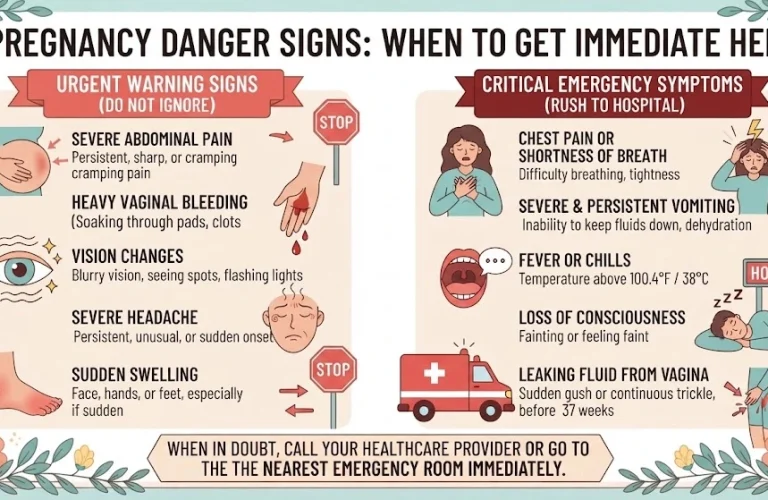
Danger Signs That Need Immediate Medical Attention
1. Heavy Vaginal Bleeding
Light spotting can sometimes be harmless, but heavy bleeding, bleeding with clots, or bleeding accompanied by pain is never something to wait out. This applies at every stage of pregnancy, from the first trimester through to your due date.
2. Severe Abdominal Pain
Persistent, intense pain different from the usual round ligament stretching or mild cramping needs urgent evaluation. This can sometimes point to complications such as an ectopic pregnancy in early pregnancy, or placental issues later on.
3. Severe Headache With Vision Changes
A headache that doesn’t improve with rest or paracetamol, especially combined with blurred vision, seeing spots, or sensitivity to light, is one of the key warning signs of preeclampsia. This is something I take very seriously, particularly in the second half of pregnancy.
4. Sudden Swelling in Face, Hands, or Feet
Some swelling in the feet is common in pregnancy, especially by evening. But sudden or severe swelling, particularly in your face and hands, combined with a headache or vision changes, again points toward preeclampsia and needs prompt evaluation.
5. Reduced or No Fetal Movement
Once you’re consistently feeling your baby move, usually from around 20 weeks onward, a noticeable drop in movement, or no movement at all over a few hours, should never be ignored. I always tell patients: don’t wait until your next scheduled appointment for this one.
6. Leaking Fluid or Your Water Breaking
If you notice a sudden gush or a slow, steady trickle of fluid before you’re full term, this needs immediate assessment, regardless of whether you’re also having contractions.
7. Contractions Before 37 Weeks
Regular, painful tightening of the abdomen before 37 weeks can be a sign of preterm labour. Some tightening is normal, especially later in pregnancy, but if contractions become regular and painful, it’s time to get checked.
8. High Fever
A fever above 38°C (100.4°F), particularly with chills, can indicate an infection that needs prompt treatment during pregnancy.
9. Persistent Vomiting
Some nausea is expected, especially in the first trimester, but vomiting so severe that you can’t keep fluids down risks dehydration and needs medical attention.
10. Severe Difficulty Breathing or Chest Pain
While mild breathlessness can happen as your uterus grows, sudden or severe difficulty breathing, or chest pain, always warrants an emergency evaluation.
11. Painful Urination or Signs of a Urinary Infection
Burning during urination, urgency, or lower back pain can indicate a urinary tract infection, which, if left untreated in pregnancy, can lead to more serious complications.
Managing Hot Flashes and Mood Swings Naturally
I always start with natural, lifestyle-based strategies before considering anything else, and for many women, these changes alone make a meaningful difference.
When "Just Wait and See" Isn't the Right Approach
I understand the instinct to not want to “make a fuss” or worry your family unnecessarily. But with any of the signs above, I always tell my patients: call me, or go straight to the hospital don’t wait to see if it passes. Pregnancy complications can progress quickly, and early evaluation is almost always what leads to the best outcome, both for you and your baby.
Regular Antenatal Visits Reduce Your Risk
Many of these complications, particularly preeclampsia, are caught early through routine antenatal monitoring, which is exactly why I encourage consistent visits throughout pregnancy rather than only coming in when something feels wrong. If you have an underlying condition such as a hormonal imbalance, or a history of miscarriage, I monitor you even more closely, since your risk profile may be different from a standard pregnancy.
A Note for First-Time Mothers
If this is your first pregnancy, everything can feel unfamiliar, and it’s genuinely hard to know what’s normal. I always tell first-time mothers: there’s no such thing as a silly question at 2am. If something feels wrong to you, that instinct is worth listening to, even if you can’t quite explain why.
FAQs
What is the most serious danger sign in pregnancy?
Heavy vaginal bleeding, severe abdominal pain, and reduced fetal movement are among the most serious signs, and all three require immediate medical attention rather than waiting.
Is mild swelling in the feet normal during pregnancy?
Yes, mild swelling, especially by evening, is common. It only becomes concerning when it’s sudden, severe, or affects your face and hands alongside other symptoms like headache.
How much fetal movement is considered normal?
This varies by baby, but you should get to know your baby’s usual pattern from around 20 weeks and reach out immediately if movement noticeably decreases or stops.
Can a severe headache during pregnancy really be serious?
Yes, especially in the second half of pregnancy. A severe, persistent headache with vision changes can be an early sign of preeclampsia and needs urgent evaluation.
Should I go to the hospital if I think my water has broken?
Yes, always get evaluated promptly, whether it’s a large gush or a slow trickle, and regardless of whether contractions have started yet.
Your Safety and Your Baby's Safety Come First
Knowing these warning signs isn’t about causing worry, it’s about making sure you feel confident and prepared throughout your pregnancy. If you’re currently pregnant and have questions, or want to establish regular antenatal care, I invite you to book a consultation at my clinic in Islamabad, or reach out through online consultation. Please never hesitate to call if something doesn’t feel right.
Medical Review: This page has been thoroughly reviewed and medically verified by Dr. Sajida Guftaar to ensure clinical accuracy and reliability.