
What to Expect During the First 12 Weeks of Pregnancy? Which Foods to Avoid in Early Pregnancy
There’s a particular kind of excitement and nervousness I see on a patient’s face at her very first pregnancy visit usually somewhere around six to eight weeks. She has a hundred questions, and honestly, I love this part of my job. The first trimester is when your body is doing the most invisible work, and I want to walk you through what’s actually happening, week by week, and what you should be eating and avoiding during this time.
Why the First Trimester Deserves Extra Attention
The first 12 weeks are when your baby’s major organs, brain, and spine are forming. It’s also the period with the highest miscarriage risk, which is exactly why I ask patients to be a little more cautious and a lot more attentive to their bodies during this window. Once you cross into the second trimester, that risk drops significantly, and most women start to feel noticeably better too.

What to Expect, Week by Week
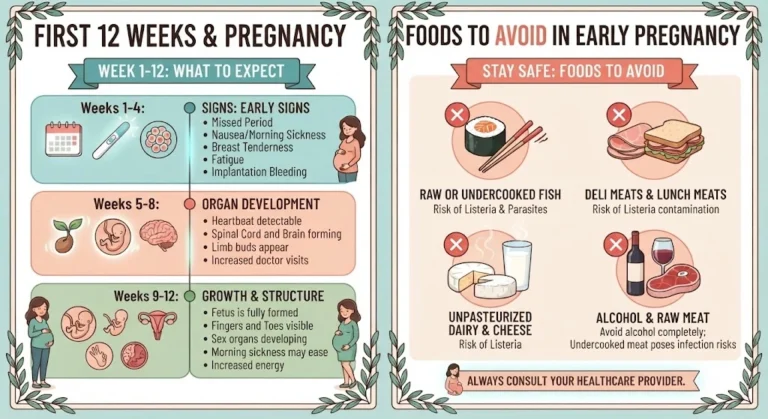
Weeks 4–6: The First Signs
This is usually when a missed period leads to a positive pregnancy test. Early symptoms often include breast tenderness, mild cramping, fatigue, and for some women, the very first hints of nausea. I always recommend booking your first antenatal visit around this time, or as soon as you get a positive result.
Weeks 7–9: Morning Sickness Peaks
Despite the name, nausea can strike any time of day, not just mornings. This is also when fatigue tends to be at its worst, largely due to rising progesterone. Food aversions and a heightened sense of smell are extremely common complaints I hear at this stage.
Weeks 10–12: Settling In
By now, many women start noticing early nausea easing slightly, though this varies a lot from person to person. Your first proper dating scan usually falls within this window, and it’s often the first time you’ll hear your baby’s heartbeat — a moment I never get tired of witnessing with my patients.
Throughout these 12 weeks, I typically order baseline blood tests, check your blood group, screen for infections, and confirm your due date via ultrasound. I also start discussing supplements, since this stage really shapes the rest of your pregnancy.
Foods to Avoid in Early Pregnancy
I get asked about this constantly, and I’d rather give patients a clear list than have them worry over every meal.
- Raw or undercooked meat and eggs– These carry a risk of salmonella and toxoplasmosis, both of which can affect the pregnancy. Make sure meat is cooked through and eggs are fully set.
- Unpasteurised dairy products– Soft cheeses and unpasteurised milk can carry listeria, which is particularly dangerous in pregnancy.
- High-mercury fish– Species like shark, swordfish, and king mackerel should be avoided. Smaller fish in moderate amounts are generally fine and offer good nutritional value.
- Excess caffeine– I advise keeping caffeine under roughly 200mg a day, which is about one regular cup of coffee. Higher intake has been linked to increased miscarriage risk.
- Unwashed fruits and vegetables– These can carry toxoplasmosis and other contaminants, so thorough washing matters more than people expect.
- Certain herbal teas and supplements– Not everything labelled “natural” is safe in pregnancy. I always ask patients to check with me before starting anything new, including herbal remedies.
- Processed and packaged foods high in salt– Not dangerous in small amounts, but worth limiting as part of an overall balanced diet.
What I Recommend Eating Instead
Rather than focusing only on restrictions, I like to steer the conversation toward what supports a healthy pregnancy: leafy greens, lean protein, whole grains, dairy (pasteurised), fruit, and plenty of water. Folic acid supplementation is something I discuss with every patient, ideally started even before conception, alongside iron and vitamin D based on your individual bloodwork.
When to Call Me Rather Than Wait
I always tell patients not to hesitate to reach out if they experience heavy bleeding, severe abdominal pain, persistent vomiting that prevents keeping fluids down, fever, or a sudden loss of pregnancy symptoms. Most first trimesters proceed without complication, but catching an issue early makes a real difference, and I would always rather have a patient call unnecessarily than stay silent about something concerning.
A Personal Note on This Stage
I know the first trimester can feel like a strange mix of joy and anxiety, especially with so much happening that you can’t see or feel directly yet. That’s exactly why regular antenatal visits matter so much in these early weeks. If you’re navigating any hormonal conditions alongside pregnancy, or have a history that needs closer monitoring, we’ll tailor your care plan accordingly from the very first visit.
FAQs
Is it normal to have no symptoms in early pregnancy?
Yes, completely normal. Some women experience very few symptoms in the first trimester, and this doesn’t indicate anything is wrong.
Which foods should I completely avoid during the first 12 weeks?
Raw meat and eggs, unpasteurised dairy, high-mercury fish, alcohol, and unwashed produce are the main foods I advise avoiding entirely.
Is coffee completely off-limits during pregnancy?
No, but I recommend limiting caffeine to around 200mg a day, roughly one regular cup of coffee, rather than cutting it out completely.
When should I schedule my first antenatal visit?
As soon as you get a positive pregnancy test, ideally between weeks 6 and 8, so we can confirm dates and start baseline testing early.
When does morning sickness usually improve?
For most women, nausea eases somewhere between weeks 12 and 14, though the exact timing varies from person to person.
Let's Support a Healthy Start to Your Pregnancy
Every pregnancy is different, and the first 12 weeks set the tone for everything that follows. If you’re newly pregnant or planning to conceive and want personalised guidance, I invite you to book a consultation at my clinic in Islamabad, or reach out through online consultation. I’m here to support you through every stage, starting from week one.
Medical Review: This page has been thoroughly reviewed and medically verified by Dr. Sajida Guftaar to ensure clinical accuracy and reliability.