
Endometriosis: The Hidden Cause of Severe Period Pain Many Women Ignore | A Gynecologist Explains
Many women are told that painful periods are simply a normal part of being a woman. However, severe period pain that affects your daily life should not be ignored.
One possible reason behind intense menstrual pain is endometriosis, a condition that affects many women but often remains undiagnosed for years.
As a gynecologist, one of the most important messages I share with my patients is this:
Painful periods are common, but severe pain that interrupts your routine deserves proper medical attention.
Endometriosis is not just about period discomfort. It is a condition that can affect a woman’s quality of life, fertility, emotional well-being, and overall health.
Through awareness and timely evaluation, women can better understand their symptoms and seek appropriate care.
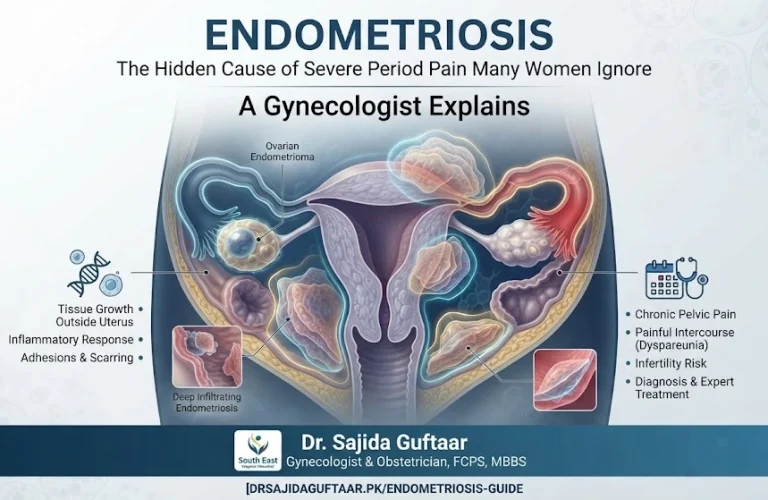
What Is Endometriosis?
Endometriosis is a condition where tissue similar to the lining of the uterus (endometrium) grows outside the uterus.
This tissue may develop around areas such as:
- Ovaries
- Fallopian tubes
- Pelvic lining
- Other organs within the pelvic area
Like the normal uterine lining, this tissue responds to hormonal changes during the menstrual cycle. However, because it grows outside the uterus, it can cause inflammation, irritation, and pain.
According to the World Health Organization (WHO), endometriosis can significantly affect women’s physical health, fertility, and quality of life.
Why Do Many Women Ignore Endometriosis Symptoms?
One of the biggest challenges with endometriosis is delayed diagnosis.
Many women spend years believing that:
- Severe period pain is normal
- Heavy bleeding is something they must tolerate
- Pain during menstruation is “just part of being a woman”
- They should simply manage the discomfort
As a gynecologist, I encourage women to listen to their bodies.
If period pain prevents you from working, studying, exercising, or enjoying daily activities, it is worth discussing with a healthcare professional.
Your pain is a signal from your body not something you should always ignore.
Common Symptoms of Endometriosis Women Should Know
Endometriosis symptoms can vary from woman to woman. Some women may experience severe symptoms, while others may have mild or no obvious symptoms.
Common symptoms may include:
1. Severe Period Pain (Dysmenorrhea)
Painful periods are one of the most common symptoms of endometriosis.
Women may experience:
- Severe cramps before or during periods
- Pelvic pain
- Lower abdominal discomfort
- Pain that does not improve with usual measures
If your period pain is affecting your daily routine, you may also benefit from understanding when period pain should not be ignored.
2. Heavy or Irregular Periods
Some women with endometriosis experience heavier bleeding or changes in their menstrual patterns.
Persistent changes in your cycle should be evaluated because they may be related to hormonal or gynecological conditions.
You can also learn more about irregular periods treatment and common causes of menstrual changes.
3. Pain During Intercourse
Some women experience deep pelvic pain during or after sexual intercourse.
Although this symptom can feel difficult to discuss, it is an important concern that should be shared with a gynecologist.
4. Difficulty Getting Pregnant
Endometriosis can sometimes affect fertility. Some women discover they have endometriosis while seeking help for difficulty conceiving.
If you have been trying to conceive and are facing challenges, understanding the possible causes of infertility is important. You can explore my guidance on trying to conceive but not getting pregnant and when to seek medical help.
5. Pelvic Pain Between Periods
Endometriosis-related pain may not only occur during menstruation. Some women experience ongoing pelvic discomfort throughout the month.
What Causes Endometriosis?
The exact cause of endometriosis is not completely understood. However, several factors may contribute to its development.
Possible factors include:
- Family history of endometriosis
- Hormonal influences
- Immune system factors
- Menstrual flow-related factors
- Genetic factors
More research is ongoing to better understand why some women develop endometriosis.
How Is Endometriosis Diagnosed?
Diagnosing endometriosis requires a detailed medical evaluation.
During consultation, I usually consider:
- Your symptoms
- Menstrual history
- Pain patterns
- Medical history
- Fertility concerns
- Physical examination findings
Depending on the situation, further evaluation may include imaging tests or specialist investigations.
Early discussion with a gynecologist can help women understand whether their symptoms require further assessment.
Endometriosis and Fertility: What Women Should Know
Many women with endometriosis can become pregnant naturally, while others may experience challenges depending on the severity of the condition.
Endometriosis may affect fertility by:
- Causing inflammation in the pelvic area
- Affecting ovarian function
- Impacting fallopian tubes
- Influencing the environment needed for conception
However, every woman’s situation is different.
If fertility is a concern, a personalized evaluation can help determine the best approach. You can learn more about my infertility treatment services and fertility care options.
Endometriosis Treatment: What Are the Options?
Treatment depends on:
- Severity of symptoms
- Age
- Fertility goals
- Overall health
- Individual concerns
Treatment approaches may include:
Lifestyle and Symptom Management
Healthy lifestyle choices, pain management strategies, and medical guidance can help improve quality of life.
Medication Options
Doctors may recommend medications to help manage pain and hormonal symptoms.
Surgical Treatment
In some cases, surgery may be considered depending on the condition and individual needs.
The right treatment plan should always be personalized after proper evaluation.
Endometriosis and Hormonal Health
Hormones play an important role in many gynecological conditions.
Women experiencing menstrual concerns, hormonal symptoms, or reproductive health issues may benefit from a complete evaluation rather than focusing on only one symptom.
You can learn more about hormonal imbalance treatment and managing women’s hormonal health concerns.
When Should You See a Gynecologist for Period Pain?
I recommend consulting a gynecologist if you experience:
- Period pain that stops you from normal activities
- Pain that becomes worse over time
- Heavy menstrual bleeding
- Pain during intercourse
- Difficulty conceiving
- Pelvic pain outside your period
Many women delay seeking help because they believe their symptoms are “normal.” However, early evaluation can help identify the cause and guide appropriate care.
If you feel nervous about discussing personal concerns, my guide on how to prepare for a gynecology visit if you feel shy or nervous may help you feel more comfortable.
My Message to Women Living With Severe Period Pain
As a gynecologist, I want women to know that they deserve to live without accepting severe pain as a normal part of life.
Your menstrual health is an important part of your overall wellbeing. If your periods are painful, your concerns are valid. Seeking medical advice is not an overreaction, it is a step toward understanding your body and protecting your health.
Through my practice, I support women with menstrual concerns, hormonal issues, fertility challenges, and other gynecological conditions with compassionate and personalized care.
You can explore my complete range of women’s health and gynecology services.
FAQs
What is endometriosis?
Endometriosis is a condition where tissue similar to the uterine lining grows outside the uterus, causing inflammation, pain, and sometimes fertility problems.
Is severe period pain normal?
Mild discomfort during periods can be common, but severe pain that affects daily activities should be evaluated by a gynecologist.
What are the first signs of endometriosis?
Common signs may include severe period pain, pelvic pain, painful intercourse, heavy periods, and difficulty getting pregnant.
Can endometriosis cause infertility?
Endometriosis may affect fertility in some women, but many women with endometriosis can still become pregnant with appropriate care and guidance.
How is endometriosis diagnosed?
Diagnosis usually involves discussing symptoms, medical history, examination, and sometimes imaging or additional investigations.
Final Thoughts
Endometriosis is more than just painful periods. It is a condition that deserves awareness, understanding, and timely medical support. Women should not feel that they have to silently tolerate severe menstrual pain. By recognizing symptoms early and seeking professional guidance, women can take control of their reproductive health and improve their quality of life.
Take the First Step Toward Better Menstrual Health
If you experience severe period pain, pelvic discomfort, irregular periods, or concerns about fertility, a proper gynecological evaluation can help identify the cause and guide you toward the right care.
Your pain deserves attention. Your health deserves priority.
Medical Review: This page has been thoroughly reviewed and medically verified by Dr. Sajida Guftaar to ensure clinical accuracy and reliability.