
Low AMH Level and Fertility: Does Low AMH Mean You Cannot Get Pregnant? A Gynecologist Explains
Receiving a report that shows a low AMH level can be stressful for many women, especially those who are trying to conceive. One of the first questions I hear from my patients is:
“Does low AMH mean I cannot get pregnant?”
The answer is: No, a low AMH level does not automatically mean pregnancy is impossible.
As a gynecologist, I understand how worrying fertility test results can feel. However, one test result should always be interpreted in the context of your complete health history, age, menstrual cycle, ovarian function, and other fertility factors.
AMH (Anti-Müllerian Hormone) is one part of fertility evaluation, but it is not the only factor that determines whether a woman can conceive.
What Is AMH and Why Is It Important for Fertility?
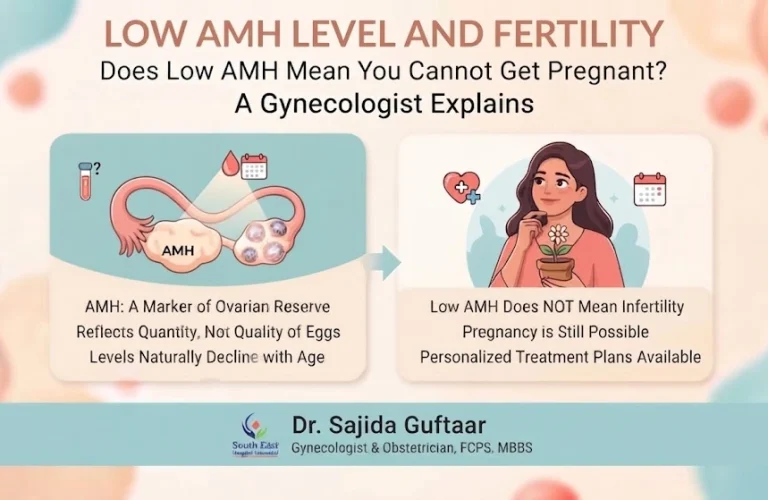
AMH, or Anti-Müllerian Hormone, is a hormone produced by small follicles inside the ovaries.
An AMH test is commonly used to estimate ovarian reserve, which refers to the remaining number of eggs a woman may have.
A low AMH level may suggest a lower ovarian reserve compared with average levels for a woman’s age.
However, it is important to understand:
- AMH does not measure egg quality directly
- AMH does not predict natural fertility with complete certainty
- A low AMH result does not mean pregnancy cannot happen
According to the American Society for Reproductive Medicine (ASRM), ovarian reserve tests can provide useful information, but they should be interpreted alongside other fertility factors rather than used alone to predict reproductive potential.
Does Low AMH Mean You Cannot Get Pregnant?
This is one of the biggest concerns among women who receive a low AMH result.
The reality is that many women with low AMH levels can still become pregnant, depending on various factors such as:
- Age
- Egg quality
- Ovulation status
- Sperm health of the partner
- Fallopian tube condition
- Overall reproductive health
Fertility is complex, and pregnancy depends on multiple factors working together.
I always advise my patients not to lose hope after seeing a single fertility test result. Instead, the next step should be understanding the complete picture and discussing appropriate options.
If you are trying to conceive but facing difficulties, you can learn more about when to seek help for infertility and difficulty getting pregnant.
What Causes Low AMH Levels?
AMH levels naturally decrease as women age because ovarian reserve declines over time.
Some possible factors associated with lower AMH levels include:
1. Age-Related Decline in Ovarian Reserve
Age is one of the most important factors affecting fertility. As women get older, both egg quantity and quality gradually decline.
2. Genetic Factors
Some women naturally have a lower ovarian reserve due to genetic factors.
3. Previous Ovarian Surgery
Certain ovarian procedures may affect ovarian reserve.
4. Medical Treatments
Some treatments, including certain chemotherapy or radiation therapies, may impact ovarian function.
5. Hormonal and Reproductive Health Conditions
Conditions affecting hormonal balance may influence fertility and menstrual patterns.
Women experiencing hormonal concerns can also explore my guidance on hormonal imbalance treatment and women’s hormonal health.
Low AMH Symptoms: Can You Feel Low Ovarian Reserve?
Many women ask:
“How will I know if my AMH is low?”
The important thing to understand is that low AMH usually does not cause specific symptoms.
Some women may have:
- Regular periods
- No noticeable symptoms
- No obvious signs of reduced ovarian reserve
This is why fertility evaluation is often important for women who are trying to conceive or planning pregnancy.
If you are considering pregnancy, especially after age 30, discussing your fertility health early can provide valuable information. You can also read my guide on planning pregnancy after 30 and important health checks before conception.
Can You Improve AMH Levels Naturally?
Many women ask whether lifestyle changes can increase AMH levels.
Currently, there is no proven method to significantly increase ovarian reserve once it has declined.
However, healthy lifestyle choices can support overall reproductive health, including:
- Maintaining a healthy weight
- Eating a balanced diet
- Staying physically active
- Avoiding smoking
- Managing stress
- Getting appropriate medical guidance
The goal is not only to focus on one number but to support your complete reproductive wellbeing.
Low AMH and IVF: Does Low AMH Affect Fertility Treatment?
Low AMH may influence how the ovaries respond to fertility medications during treatments such as IVF.
However, treatment decisions depend on many factors, including:
- Age
- AMH level
- Other hormone tests
- Previous fertility history
- Partner’s fertility evaluation
A fertility specialist or gynecologist can help determine the most appropriate approach for each individual woman.
If you need professional fertility guidance, you can explore my infertility treatment services.
When Should You See a Gynecologist About Low AMH?
I recommend seeking fertility guidance if:
- You have been trying to conceive without success
- You have received a low AMH report
- You have irregular periods
- You are planning pregnancy at an older age
- You have a history of ovarian problems
- You are concerned about your reproductive health
According to the American College of Obstetricians and Gynecologists (ACOG), fertility evaluation should consider both partners and multiple aspects of reproductive health.
My Advice to Women Worried About Low AMH
A low AMH result can feel overwhelming, but it should not be viewed as the end of your fertility journey.
Every woman’s situation is different.
As a gynecologist, my approach is to look beyond a single test report and understand the complete picture — your age, medical history, menstrual health, reproductive goals, and individual concerns.
Early consultation can help you understand your options and make informed decisions about your fertility.
For more guidance about fertility and women’s health, you can explore my Health Hub.
FAQs
Can I get pregnant naturally with low AMH?
Yes, some women with low AMH can conceive naturally. AMH is only one factor in fertility and does not completely predict pregnancy chances.
What is considered a low AMH level?
AMH levels vary depending on age, laboratory methods, and individual circumstances. A gynecologist should interpret your result based on your overall fertility profile.
Does low AMH mean early menopause?
Not necessarily, Low AMH may indicate reduced ovarian reserve, but it does not directly predict exactly when menopause will occur.
Should I repeat my AMH test?
Sometimes doctors may recommend repeating or combining AMH testing with other fertility assessments to better understand ovarian function.
Can PCOS affect AMH levels?
Women with PCOS may sometimes have higher AMH levels due to increased follicle count. If you have concerns about PCOS and fertility, you can learn more about PCOS treatment and hormonal management.
When should I see a fertility specialist?
Women under 35 who have been trying for 12 months without pregnancy, or women over 35 who have been trying for 6 months, should consider fertility evaluation.
You can also read:
How long should you try before seeing a fertility specialist?
Final Thoughts
Low AMH does not mean you have lost all hope of becoming a mother.
Fertility is influenced by many factors, and every woman’s journey is unique. The most important step is understanding your health, getting accurate information, and seeking timely medical guidance.
Through my practice, I support women with fertility concerns, hormonal issues, and reproductive health needs by providing personalized care and evidence-based guidance.
Take the Next Step Towards Understanding Your Fertility
If you have a low AMH report, are trying to conceive, or have concerns about your reproductive health, a proper fertility evaluation can help you understand your options.
Your fertility journey deserves personalized care and expert guidance.
Medical Review: This page has been thoroughly reviewed and medically verified by Dr. Sajida Guftaar to ensure clinical accuracy and reliability.