
Which Birth Control Method Has the Least Side Effects? How to Choose the Best Family Planning Method
One of the most common conversations I have in my clinic starts the same way: “Doctor, which birth control is safest, with the least side effects?” It’s a fair question, and honestly, there isn’t one universal answer because the “best” method depends entirely on your body, your health history, and what stage of life you’re in. Let me walk you through this the way I would if you were sitting across from me.
There's No Single "Best" Method for Everyone
I always tell my patients this first: what works beautifully for your sister or your friend might not suit you at all. Birth control isn’t one-size-fits-all. A method’s side effects depend on your hormonal profile, whether you have conditions like PCOS or a hormonal imbalance, whether you smoke, your age, and whether you’re breastfeeding. So instead of chasing a single “safest” answer, I prefer to walk patients through the real trade-offs of each option.
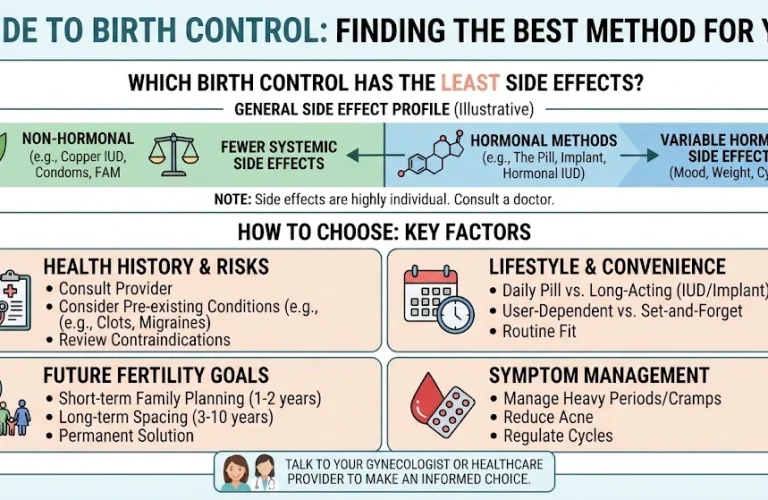
Non-Hormonal Methods: Often the Lowest Side-Effect Profile
If you’re specifically looking to avoid hormonal side effects like mood changes, weight fluctuation, or spotting, non-hormonal options are usually where I start the conversation.
- Copper IUD– This is one of the most effective reversible methods available, and it contains no hormones at all. It can last up to 10 years. The main downside I mention is that periods can become heavier or crampier, especially in the first few months.
- Barrier methods (condoms, diaphragms)– These carry essentially no systemic side effects and have the added benefit of protecting against sexually transmitted infections. The trade-off is a slightly higher typical-use failure rate compared to other methods.
- Fertility awareness / natural methods– These involve no medication whatsoever but require real discipline in tracking your cycle, and they’re less forgiving if your periods are irregular.
Hormonal Methods: Lower-Dose Options Tend to Suit More Women
Not every hormonal method affects the body the same way, and many of my patients are pleasantly surprised by how well-tolerated some options are.
- Hormonal IUD (like Mirena): Because it releases a small, localized dose of progestin directly into the uterus rather than through the whole body, most women experience far fewer systemic side effects than with the pill. Many patients find their periods become lighter or stop altogether over time.
- Progestin-only pill (mini-pill): A reasonable option for women who are breastfeeding or who don’t tolerate estrogen well, though it requires strict daily timing.
- Combined oral contraceptive pill: Highly effective and often helpful for regulating irregular periods or reducing acne, but it does carry a slightly higher risk of side effects like nausea, mood changes, or blood clots, particularly in smokers or women over 35.
- Implant: A small rod placed under the skin of the arm, releasing a steady low dose of hormone. Very effective and low-maintenance, though irregular spotting is a common early side effect.
In general, I tell patients that methods delivering hormones locally like the hormonal IUD or the implant tend to cause fewer whole-body side effects than pills, which travel through your entire system.
How I Help Patients Choose the Right Family Planning Method
When someone comes to me unsure of where to start, I walk through a few key questions together:
- Are you done having children, or planning for more later?This affects whether we discuss a long-term method or something easily reversible.
- Do you have any existing health conditions?Migraines with aura, high blood pressure, a history of blood clots, or fibroids can all steer us away from certain options.
- How do you feel about maintenance?Some women prefer a “set it and forget it” method like an IUD or implant, while others are comfortable with a daily pill.
- Are you breastfeeding?This narrows the safe options considerably, particularly ruling out oestrogen-containing methods in the early months.
- Do you need protection against STIs as well?If so, condoms remain necessary alongside any other method you choose.
There’s no shortcut to this — it really does need a proper conversation and, often, a physical examination and some basic tests before I recommend a specific method.
When I Recommend a One-on-One Consultation
I always encourage women to come in for a proper family planning consultation rather than choosing based on what a friend used or something they read online. Your medical history matters more than trends, and a method that’s perfect for one woman can be entirely wrong for another. If you’ve tried a method before and had a rough experience with it, that’s especially worth discussing often there’s a better-suited alternative we haven’t tried yet.
FAQs
Which birth control method has the fewest side effects overall?
Non-hormonal options like the copper IUD or barrier methods tend to have the fewest systemic side effects, while among hormonal methods, the hormonal IUD generally causes fewer whole-body effects than the pill.
Is the birth control pill safe for long-term use?
For most healthy women without risk factors like smoking or a clotting disorder, yes. That said, I recommend periodic check-ins to reassess whether it’s still the right fit for you.
Can birth control affect my ability to get pregnant later?
No. Fertility typically returns to normal shortly after stopping any birth control method, including long-acting ones like the IUD or implant.
Does birth control cause weight gain?
This varies significantly by individual and by method. Some women notice no change at all, while others report mild fluctuations, most commonly with certain injectable options.
How do I know if a method isn't suiting me?
Persistent headaches, mood changes, irregular bleeding beyond the initial adjustment period, or new health symptoms are all reasons to come back and discuss switching methods.
Ready to Find the Right Method for You?
Choosing birth control shouldn’t feel like guesswork. If you’d like personalised guidance based on your health history and lifestyle, I invite you to book a consultation at my clinic in Islamabad, either in person or through online consultation. Together, we’ll find a family planning method that truly fits your body and your life.
Medical Review: This page has been thoroughly reviewed and medically verified by Dr. Sajida Guftaar to ensure clinical accuracy and reliability.