
What to Expect in Your First Pregnancy Scan Visit
Finding out you are pregnant is one of the most significant moments in a woman’s life. And almost immediately, the questions start: When should I go for a scan? What will they check? Is everything okay?
If you are feeling a little anxious before your first scan, you are not alone. This is completely normal. Most women walk into their first ultrasound appointment with a mix of excitement and nervousness, and many are not sure what to expect or what the doctor is actually looking for.
This page is here to walk you through it — calmly and clearly.
The Short Answer
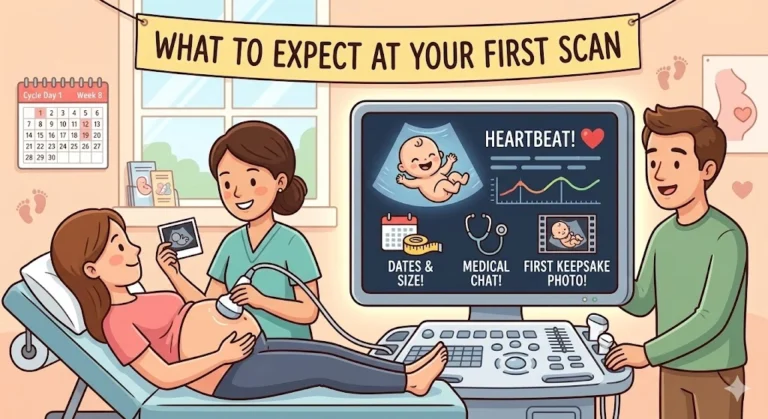
Your first pregnancy scan is usually done between *6 and 10 weeks* of pregnancy, though timing may vary based on your symptoms or circumstances. The doctor uses it to confirm the pregnancy is in the right location, check for a heartbeat, estimate how far along you are, and rule out any early concerns. It is a diagnostic scan, not a gender scan — that comes much later.
Why the First Pregnancy Scan Feels So Stressful
For many women, the anxiety comes from not knowing what they will see — or what they will not see. Questions like what if there is no heartbeat, what if something is wrong, what if the dates don’t match can feel overwhelming in those first weeks.
Part of this worry comes from the simple fact that early pregnancy is still invisible to the outside world. You may not look pregnant yet. You may or may not have strong symptoms. And yet something very important is happening, and you want to know that it is happening correctly.
This is why your first scan visit matters — not because something is likely to be wrong, but because seeing things clearly gives both you and your doctor real information to work with.
When Is the First Pregnancy Scan Usually Done?
Most doctors recommend the first scan somewhere between 6 and 10 weeks after your last menstrual period. Some clinics prefer waiting until around 7 to 8 weeks, because this is typically when a fetal heartbeat becomes more clearly visible on ultrasound.
There are also situations where a doctor may ask you to come in earlier — for example, if you have had a previous miscarriage, if you are experiencing pain or spotting, or if your period dates are unclear and dating the pregnancy is important.
In some cases, your doctor may do a *transvaginal ultrasound* (a probe that goes gently inside the vagina) rather than a scan through the abdomen, especially in very early pregnancy. This is not something to be alarmed about — it gives a clearer picture when the pregnancy is still very small, and it is a routine part of early obstetric care.
What Is the Doctor Actually Checking?
This is one of the most common questions women have, and it is a good one to understand before you walk in.
Confirming the pregnancy is in the right place
The first thing your doctor checks is whether the pregnancy is inside the uterus, where it should be. In rare cases, a fertilized egg can implant in the fallopian tube instead — this is called an ectopic pregnancy, and it is a medical emergency that needs urgent attention. The scan rules this out early.
Seeing the heartbeat
If you are at least 6 to 7 weeks, the scan will usually look for a fetal heartbeat. Seeing that small flicker on screen is often the moment a pregnancy feels very real for many women. If no heartbeat is seen at a very early scan, it does not always mean something is wrong it sometimes just means it is too early, and a repeat scan in one to two weeks is needed.
Estimating your gestational age
The doctor will measure the size of the embryo, usually something called the crown-rump length (CRL), to estimate how many weeks pregnant you are. This is often more accurate than counting from your last period, especially if your cycles are irregular.
Checking for multiples
The scan will show whether there is more than one pregnancy sac. If you are carrying twins, this is usually first discovered here.
What If the Scan Dates Do Not Match Your Last Period?
This is one of the most common sources of confusion and worry at the first scan visit.
If the scan shows you are 6 weeks and 3 days pregnant but you calculated 8 weeks based on your last period, it does not automatically mean something is wrong. Cycles vary. Ovulation does not always happen on day 14. Implantation timing differs.
Your doctor will take the scan measurements as the more reliable dating reference, especially in the first trimester. The due date may be adjusted slightly based on what the scan shows, and that is perfectly normal.
Only if the size difference is very significant several weeks off rather than a few days will your doctor want to investigate further. A small date discrepancy is common and usually nothing to be concerned about.
What If You Have Spotting or Pain Before the First Scan?
This question comes up often, and it causes a great deal of unnecessary panic — though that does not mean spotting should always be ignored.
Light spotting
In early pregnancy is actually quite common. It can happen due to implantation bleeding, increased blood flow to the cervix, or other benign reasons. Many women who experience light early spotting go on to have completely healthy pregnancies.
When should you not wait?
If you have heavy bleeding (soaking through a pad), significant cramping, shoulder tip pain, or feel dizzy or faint, do not wait for a scheduled scan appointment. These symptoms need urgent evaluation, as they can be signs of a miscarriage or, in rare cases, an ectopic pregnancy.
If you are concerned about symptoms but they are not severe, calling your doctor’s clinic and describing what you are experiencing is always a reasonable first step. They can advise whether you need to come in sooner.
What to Bring to Your First Pregnancy Visit
Coming prepared makes your first appointment go more smoothly. Here is what is usually helpful to have with you:
Your last menstrual period (LMP) date
This is the date your last normal period began. Even an approximate date helps with early dating.
Any previous pregnancy records or reports
Especially if you have had a miscarriage, C-section, or any complication in a prior pregnancy.
Any blood tests you may have had done
Some women come in having already had a beta hCG blood test done — bring that report with you.
A list of any medications you are currently taking
Including supplements and herbal remedies.
Your health insurance card
If applicable, and any relevant identification.
You do not need to come with a full bladder for a transvaginal scan, but for an abdominal scan, a moderately full bladder can help the doctor see things more clearly. Your clinic may give you specific instructions when booking.
When to Seek Urgent Medical Review
Most first-trimester concerns are not emergencies. But there are situations where you should not wait:
- Heavy vaginal bleeding (similar to or heavier than a period)
- Severe abdominal or pelvic pain that does not settle
- Shoulder tip pain (which can be a sign of internal bleeding from an ectopic pregnancy)
- Feeling faint, dizzy, or very unwell
In any of these situations, go to the emergency department or contact your gynecologist immediately. Do not wait for a routine appointment.
Faq's
How early can pregnancy be seen on an ultrasound?
A gestational sac (the earliest sign of pregnancy) can sometimes be seen from around 4 to 5 weeks on a transvaginal scan. However, a meaningful scan that shows a heartbeat and can accurately date the pregnancy is usually done at 6 to 8 weeks. Going too early can sometimes create more anxiety than clarity.
What if my scan shows a different gestational age than I expected?
This is very common. Small differences of a few days to a week are normal and are usually due to cycle variation or ovulation timing. Your doctor will use the scan measurements to set or adjust your due date. This does not indicate a problem with the pregnancy.
Is spotting before the first scan always dangerous?
Not always. Light spotting in early pregnancy is common and often harmless. However, heavy bleeding, significant cramping, or dizziness should be evaluated urgently. When in doubt, always call your doctor rather than waiting.
Should I bring old pregnancy reports or tests?
Yes, if you have them. Previous obstetric records, blood test results, or any reports from a prior pregnancy — especially if there were complications — help your doctor understand your history and provide better care from the start.
What happens after the first scan?
Your doctor will discuss what the scan showed and outline the next steps. This typically includes a plan for antenatal care, follow-up blood tests, vitamins and supplements, and when to come for your next appointment. If the pregnancy is progressing normally, the next detailed scan is usually the anatomy scan around 18 to 20 weeks.
Can I find out the gender at this scan?
No. The first-trimester scan is far too early for gender determination. That is usually done between 18 and 22 weeks during the anatomy scan or mid-pregnancy ultrasound.
A Few Final Words
Your first pregnancy scan is, above all else, a moment of information not judgment, not alarm. Most of the time, women walk out relieved. Occasionally, the doctor may need a repeat scan or more information before drawing conclusions. Either way, knowing is always better than not knowing.
If you are planning your first scan appointment, or if you have already had one and still have questions, do not hesitate to reach out to your gynecologist. Pregnancy brings enough natural uncertainty your doctor’s job is to help you navigate it calmly and confidently.