
How to Prepare for a Gynecology Visit if You Feel Shy or Nervous
A lot of women put off a gynecology appointment for months — sometimes longer — not because they do not care about their health, but simply because they feel awkward about it. Maybe they are unsure how to explain what they are feeling. Maybe they worry about being examined. Maybe they just feel embarrassed talking about certain things out loud, even to a doctor.
If that sounds like you, you are not alone. And you are not overreacting.
This post is for anyone who has ever sat in a waiting room with their heart racing, or postponed a visit they knew they needed because they could not figure out how to start the conversation.
The Short Answer
You do not need to have the perfect words ready. You do not need to know the medical name for what you are feeling. You just need to show up — and a good doctor will take it from there.
That said, a little preparation before your visit can make the whole experience much easier. Writing down your symptoms, bringing relevant records, and knowing what to expect can help you feel less like you are walking into the unknown.
Feeling Nervous Before a Gynecology Visit Is Very Common
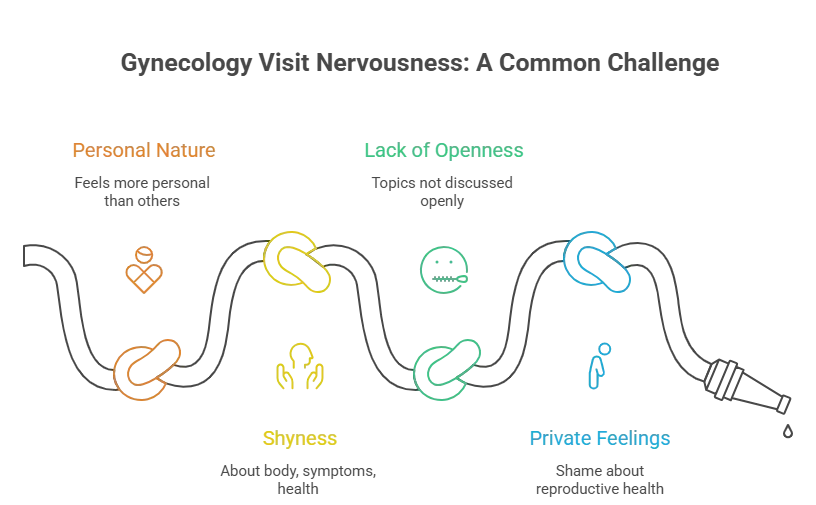
It helps to know that nearly every woman feels some level of nervousness before a gynecology appointment — especially the first one. Women who have had children, women who have never been examined before, women in their twenties and women in their fifties. It is not about age or experience. Something about this particular kind of medical visit just feels more personal than others.
Feeling shy about your body, your symptoms, or your reproductive health is completely understandable. Many women grow up in environments where these topics are not discussed openly. Talking about menstrual problems, discharge, pain during intimacy, or a missed period can feel deeply private — maybe even a little shameful, even though it absolutely should not.
A gynecologist has these conversations with patients every single day. What feels impossible to say out loud for you is, for them, just medicine. They are not there to judge you. They are there to help you.
If you have been carrying something — pain you have been ignoring, a worry you have been pushing aside, a question you have been embarrassed to ask — this visit is for exactly that.
How to Prepare Before Your Appointment
Give yourself permission to go
This sounds simple, but for many women, the biggest barrier is just deciding that their health matters enough to make the appointment in the first place. You do not need to be in crisis to see a gynecologist. Routine concerns, mild symptoms, something that just does not feel right — all of it is a valid reason to come in.
Think about what has been bothering you
In the days before your visit, try to think about what prompted you to make the appointment. Is it a change in your cycle? Pain? Something you noticed? A question that has been on your mind for a while? You do not need to organize these thoughts into a formal list, but having a rough idea of what you want to discuss will help you feel more grounded when you arrive.
Write your symptoms down
This is one of the most practical things you can do before a gynecology visit, and it makes a real difference.
When we are nervous, we forget things. You might walk into the consultation feeling clear about what you wanted to say, and then your mind goes blank the moment you sit down. If you have written it down, you can just hand over the paper or read from your phone.
Try to note things like:
– When the symptom started
– Whether it comes and goes or is constant
– Anything that makes it better or worse
– Whether you have had it before
– Any changes in your cycle — dates if you know them, or roughly how many days
You do not need to use medical language. Plain words work perfectly well. “I have been having pain on my left side that gets worse before my period” is exactly the kind of description that helps a doctor think clearly.
What to Bring to Your Appointment
Old reports, scans, and test results
If you have had any ultrasounds, blood tests, or other investigations done before — even years ago — bring them if you can. Even if they seem old or unrelated, they can give a doctor useful context. If you have had a previous gynecology issue that was treated, any paperwork from that time is worth bringing.
A list of your medications
If you take any medicines regularly — including vitamins, iron tablets, thyroid medication, contraceptives, or anything else — write them down or bring the packaging. Sometimes women do not mention certain medicines because they do not think they are relevant, but they often are.
Your period dates
Approximate dates of your last few periods are helpful, even if your cycle is irregular. If you use a period tracking app, you can just show that. If you do not track it at all, an estimate is fine — “around the 10th of last month” is useful information.
Any previous prescriptions
If you have been treated for a similar problem before — whether by a GP, another gynecologist, or any other doctor — bring those prescriptions if you have them. This prevents repeat investigations and helps your doctor understand what has already been tried.
Is It Okay to Bring Someone with You?
Yes, absolutely.
Many women feel more comfortable coming with a mother, sister, aunt, or close friend. Having someone familiar with you can reduce anxiety in the waiting room, help you remember what was discussed afterward, or simply make the whole experience feel less daunting.
If you would like your companion to be with you during the consultation, you can ask when you arrive. In most cases, this is welcome — though there may be moments during an examination where privacy is preferred, and the doctor will guide you through that naturally.
Some women prefer to come alone because they want the conversation to stay completely private. That is equally fine. There is no right or wrong approach here — only what makes you feel more comfortable.
What Usually Happens During a Gynecology Consultation
One of the biggest sources of anxiety is simply not knowing what to expect. So here is a calm, honest picture of what a typical first gynecology consultation usually looks like.
You will sit down with the doctor and have a conversation. She will ask you why you have come, what you have been experiencing, and some general questions about your health and cycle. This part is not rushed. You are allowed to go slowly, refer to your notes, or say “I am not sure how to explain this” — that is completely fine.
Based on what you describe, the doctor may ask some follow-up questions. She may review any reports or test results you have brought. Depending on what you are there for, she may recommend an examination or an ultrasound — or she may simply advise you on next steps without any examination at all. Every visit is different.
Nothing happens without your knowledge, and nothing is done without a reason being explained to you first.
If at any point you feel uncomfortable or want to ask why something is being recommended, you are allowed to ask. A good doctor will always take the time to explain.
What to Do if You Feel Too Anxious to Explain Everything
Just say so
It sounds almost too simple, but you can literally tell the doctor: “I find it hard to talk about this.” Or: “I am not sure where to start.” Or: “I wrote some things down because I was worried I would forget.”
Experienced gynecologists are very used to this. They will slow down, ask gentler questions, and give you time to find your words. You are not expected to arrive with a polished explanation.
Use your written notes
This is exactly why writing things down beforehand matters. If you cannot find the words in the moment, you can hand the doctor your notes and let them read through. It removes the pressure of having to say everything out loud.
Ask someone to speak for you
If your companion is with you and you are struggling, it is perfectly fine to say, “Can you explain what I told you on the way here?” or to let them add something you have missed. Doctors work with patients and families in this way all the time.
Faq's
What should I tell a gynecologist on my first visit?
Just tell her why you have come. Even if it is vague — “I have been having some pain” or “I wanted to get checked” — that is a starting point. The doctor will ask questions from there. You do not need a prepared speech.
Can I skip an examination if I am very nervous?
In many cases, yes. Not every consultation requires a physical examination. If one is needed and you feel anxious about it, say so. A doctor can explain exactly what is involved beforehand and can often take a gentler, step-by-step approach. You are never obligated to agree to something that has not been explained to you.
Should I write my symptoms down before the appointment?
Yes — it genuinely helps. Nervousness can affect memory, and having your notes with you means you will not forget something important once you are in the room. It also saves time and helps the doctor understand your situation more clearly.
Is it okay to bring my mother or sister with me?
Absolutely. Many women bring a family member or close friend for comfort, and most clinics are welcoming of this. Let the reception staff know when you arrive if you would like your companion to join you.
What reports or documents are most useful to bring?
Bring anything relevant: old ultrasounds, blood test results, previous prescriptions for gynecological issues, and if possible, approximate dates of your recent periods. Even if you are unsure whether something is relevant, bring it anyway. Too much information is always better than too little.
What if I start crying or feel overwhelmed during the appointment?
It happens, and it is okay. Doctors are not strangers to patients becoming emotional — especially when someone has been carrying a worry for a long time. Take a breath, take your time. There is no pressure to hold everything together. The appointment is yours.
A Few Final Words
If you have been putting off a visit because you felt shy, embarrassed, or just not sure what to say — this is a gentle reminder that there is no perfect moment, and there are no perfect words required. The fact that you are thinking about going is already a step.
Coming prepared — with a few notes, some old records if you have them, and perhaps a trusted person by your side — can make a real difference to how comfortable you feel. But even if you come with nothing except your concern, that is enough.
A gynecologist’s job is not to expect you to have all the answers. It is to help you find them.