
Planning Pregnancy After 30: What Should You Check First?
Many women today start planning pregnancy in their thirties. Some spend their twenties studying or building careers. Others focus on settling family matters, managing health conditions, or simply waiting until they feel ready. Whatever the reason, deciding to plan pregnancy after 30 is completely normal—and with the right preparation, it can go smoothly.
But while age 30 isn’t a deadline, it does mean being a bit more thoughtful. Your body is still capable, but certain health factors become more important to review before you start trying to conceive. The good news is that most of these factors are simple to check, and catching them early often makes a real difference.
The Short Answer
Before trying to conceive after 30, you should check:
- Your menstrual cycle regularity – Are your periods coming on time, or are they unpredictable?
- Thyroid function – An underactive or overactive thyroid can affect fertility.
- Blood sugar levels– Especially if you have a family history of diabetes or symptoms of insulin resistance.
- Blood pressure and weight – Both can affect pregnancy health and conception.
- Previous pregnancy history – Miscarriages, complications, or delays in conceiving before.
- General health conditions – Such as PCOS, anemia, or chronic illnesses.
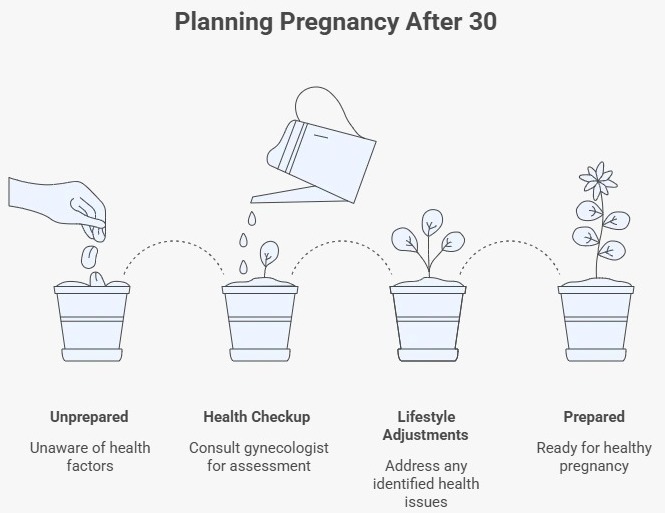
A pre-pregnancy checkup with your gynecologist helps you understand where you stand and what, if anything, needs attention before you start trying.
Why Many Women Plan Pregnancy After 30
It’s worth saying clearly: planning pregnancy in your thirties is common, and for many women, it’s the right time.
Some women spend their twenties completing education or training. Others focus on financial stability, establishing a home, or waiting for the right partner. Some deal with health conditions that needed treatment first. And some simply weren’t ready earlier—and that’s perfectly valid.
The important thing is not to panic. Age 30 isn’t a sudden drop in fertility. But it does mean your fertility starts to decline gradually, and certain pregnancy risks begin to increase slightly. That doesn’t mean pregnancy becomes difficult overnight. It just means being more intentional about preparation.
What to Check Before Trying to Conceive
When you’re planning pregnancy after 30, a few basic health checks can give you a clearer picture and help avoid delays later.
Period Regularity
Your menstrual cycle is one of the first things to pay attention to. If your periods come every 28 to 35 days fairly predictably, that’s usually a good sign that ovulation is happening regularly.
But if your periods are irregular—coming too early, too late, or skipping months—it may suggest a hormonal imbalance or an ovulation problem. Conditions like PCOS (polycystic ovary syndrome) are common causes of irregular cycles, and they can make conception take longer if not managed.
If your periods have always been unpredictable, don’t ignore it. It’s worth discussing with a gynecologist before you start trying, because treatment or lifestyle changes can often improve cycle regularity and fertility.
Thyroid Function
Your thyroid gland controls many processes in your body, including your reproductive hormones. If your thyroid is underactive (hypothyroidism) or overactive (hyperthyroidism), it can interfere with ovulation and make it harder to conceive. It can also increase the risk of miscarriage or pregnancy complications.
A simple blood test can check your thyroid levels. If there’s an issue, medication can usually correct it before pregnancy, reducing risks significantly.
Blood Sugar and Insulin Resistance
High blood sugar or insulin resistance—often linked to PCOS or prediabetes—can affect ovulation and pregnancy health. If you have a family history of diabetes, unexplained weight gain, darkening skin around the neck or underarms, or irregular periods, it’s worth checking your fasting blood sugar and HbA1c levels.
Managing blood sugar before pregnancy can improve your chances of conceiving and reduce risks during pregnancy.
Blood Pressure and Weight
High blood pressure can complicate pregnancy, and being significantly overweight or underweight can affect hormone balance and ovulation.
If your blood pressure is elevated or your weight is outside a healthy range, addressing these before conception can make pregnancy safer and sometimes easier to achieve.
Previous Pregnancy or Miscarriage History
If you’ve been pregnant before—whether it ended in delivery, miscarriage, or termination—that history matters.
Recurrent miscarriages (two or more) may indicate an underlying issue that needs investigation, such as hormonal imbalances, blood clotting disorders, or structural problems in the uterus. If you’ve had pregnancy complications like preeclampsia or gestational diabetes before, planning ahead can help manage those risks in the next pregnancy.
Even if a previous pregnancy went smoothly, it’s still helpful to update your gynecologist on your history before trying again.
When Delayed Conception or PCOS Should Not Be Ignored
If you’ve tried to conceive in the past and it took longer than expected—or if it didn’t happen at all—that’s important information.
Similarly, if you’ve been diagnosed with PCOS, even if you’re not currently experiencing symptoms, it’s worth revisiting that diagnosis before trying to conceive. PCOS doesn’t always prevent pregnancy, but it can delay it, and early treatment often improves outcomes.
Some women assume that if they’re over 30 and have PCOS or a history of delayed conception, pregnancy will be very difficult. That’s not always true. Many women with these conditions conceive successfully with proper management, medication, or minor fertility support.
The key is not to wait too long to seek advice. If you know you have a condition that could affect fertility, starting the conversation with your doctor early gives you more options.
When to Seek Medical Advice Earlie
If you’re under 35 and have been trying to conceive for a year without success, that’s generally when doctors recommend a fertility evaluation. But if you’re over 35, the recommendation is usually to seek help after six months of trying.
However, you don’t need to wait that long if you already know something might be affecting your fertility. Here are some situations where it makes sense to see a gynecologist sooner:
- You have very irregular or absent periods
- You’ve been diagnosed with PCOS, endometriosis, or thyroid issues
- You’ve had recurrent miscarriages
- You’ve had pelvic infections or surgery that could have affected your tubes or ovaries
- Your partner has known fertility issues
- You’re over 37 and want to start trying
Waiting a full year in these situations may not be the best approach. Getting checked earlier can save time and reduce stress.
What a Doctor May Ask or Check in Pre-Pregnancy Planning
When you visit a gynecologist for pre-pregnancy planning, the consultation is usually straightforward and reassuring.
Your doctor will likely ask about:
- Your menstrual cycle pattern
- Any previous pregnancies, miscarriages, or fertility issues
- Medical conditions like thyroid disorders, diabetes, high blood pressure, or PCOS
- Medications you’re currently taking
- Family history of genetic conditions or pregnancy complications
- Your lifestyle—diet, exercise, smoking, alcohol use
Depending on your history, they may recommend:
- Blood tests for thyroid function, blood sugar, hemoglobin, and vitamin levels
- An ultrasound to check your ovaries and uterus
- A review of your vaccinations (especially rubella and hepatitis B)
- Folic acid supplementation—usually started at least a month before trying to conceive
This isn’t about finding problems. It’s about understanding your baseline health and addressing anything that could be optimized before pregnancy.
Basic Pre-Pregnancy Preparation
Beyond medical checkups, there are a few simple steps most women can take when planning pregnancy:
Start folic acid
Taking 400 to 800 micrograms of folic acid daily before conception reduces the risk of neural tube defects in the baby.
Maintain a balanced diet
Focus on whole foods, vegetables, protein, and healthy fats. Avoid excessive junk food or overly restrictive diets.
Stay active
Regular, moderate exercise supports hormone balance and overall health. You don’t need to be an athlete—just move your body regularly.
Limit stress where possible:
Chronic stress can affect your cycle and overall well-being. Find small ways to manage it, whether through rest, hobbies, or support from loved ones.
Avoid smoking and limit caffeine
Smoking harms fertility and pregnancy. Excessive caffeine (more than 200–300 mg daily) may also affect conception.
These steps don’t guarantee immediate pregnancy, but they improve your chances and set a healthier foundation.
Not every heavy period is an emergency, but some situations should not be delayed.
Faq's
Is it difficult to get pregnant after 30?
Not necessarily. Many women conceive naturally in their thirties. Fertility does decline gradually after 30, but it’s not a sudden drop. Most healthy women in their early to mid-thirties still have good chances of conceiving within a year of trying. If you’re over 35 or have known health issues, it may take a bit longer, but that doesn’t mean it’s impossible.
Should I see a gynecologist before trying for pregnancy?
Yes, it’s a good idea. A pre-pregnancy consultation helps you understand your health baseline, check for any conditions that could affect conception or pregnancy, and start folic acid or other supplements if needed. It’s better to address potential issues before you start trying rather than discovering them later.
Can irregular periods affect planning pregnancy?
Yes. Irregular periods often mean irregular or absent ovulation, which can make it harder to conceive. Conditions like PCOS or thyroid imbalances are common causes. If your periods are unpredictable, it’s worth getting checked before trying to conceive, as treatment can often restore regularity and improve fertility.
What tests are usually checked before trying to conceive?
Common pre-pregnancy tests include thyroid function, blood sugar levels, hemoglobin (to check for anemia), and sometimes vitamin D or other nutritional markers. Depending on your history, your doctor may also recommend an ultrasound to check your ovaries and uterus, or additional tests for specific conditions.
When should I seek help if pregnancy is not happening?
If you’re under 35, seek help after one year of trying without success. If you’re 35 or older, six months is the general recommendation. However, if you have irregular periods, known health conditions, or a history of miscarriage or fertility issues, it’s wise to consult a gynecologist earlier—even before you start trying.
Can PCOS be managed before pregnancy?
Yes. PCOS can often be managed with lifestyle changes, medications to regulate cycles and improve ovulation, and sometimes insulin-sensitizing drugs if needed. Many women with PCOS conceive successfully with proper treatment and guidance.
Final Thoughts
Planning pregnancy after 30 doesn’t have to feel overwhelming or worrying. Many women conceive naturally and have healthy pregnancies in their thirties and even early forties.
The most important thing is to be informed and proactive. A simple pre-pregnancy checkup can identify any issues worth addressing, and in most cases, small adjustments or treatments make a meaningful difference.
If you’ve been thinking about pregnancy but aren’t sure where to start, a conversation with your gynecologist is a good first step. You’ll get clarity, practical advice, and a plan that’s tailored to your health and situation.